
Framework Quick Reference
When to use this: Your team can’t agree on messaging or content direction, or you’re unsure which pain points actually resonate with your target audience.
What you’ll achieve: Data-driven message validation that gets stakeholder buy-in and identifies which campaigns to scale based on real market feedback.
Who this is for: B2B companies testing new positioning, launching new products, or struggling to align internal teams on content strategy.
How it works: Talk to your ICP to identify pain points, create content mirroring those messages, distribute on channels like LinkedIn, measure engagement, then expand campaigns around winning messages.
What you’ll need: Access to your ICP for conversations, content creator for rapid iteration, and distribution channel (typically LinkedIn) with existing audience.
Time to results: 2-4 weeks to test 4-6 messages and identify clear winners for campaign expansion.
Generating demand and affinity is all about speaking the language of your audience.
Understanding their most challenging pain points — and demonstrating your understanding to buyers.
This framework is a lightweight way to quickly hone your messaging and shape your strategy to align directly with the most important and recognizable challenges your audience is facing.
It’s a systematic way to capture and test messages before you build expanded campaigns.
If your team is struggling to get agreement on specific content ideas or campaigns, this is a great way to quickly iterate and collect data you can use to align internal stakeholders and get buy-in.
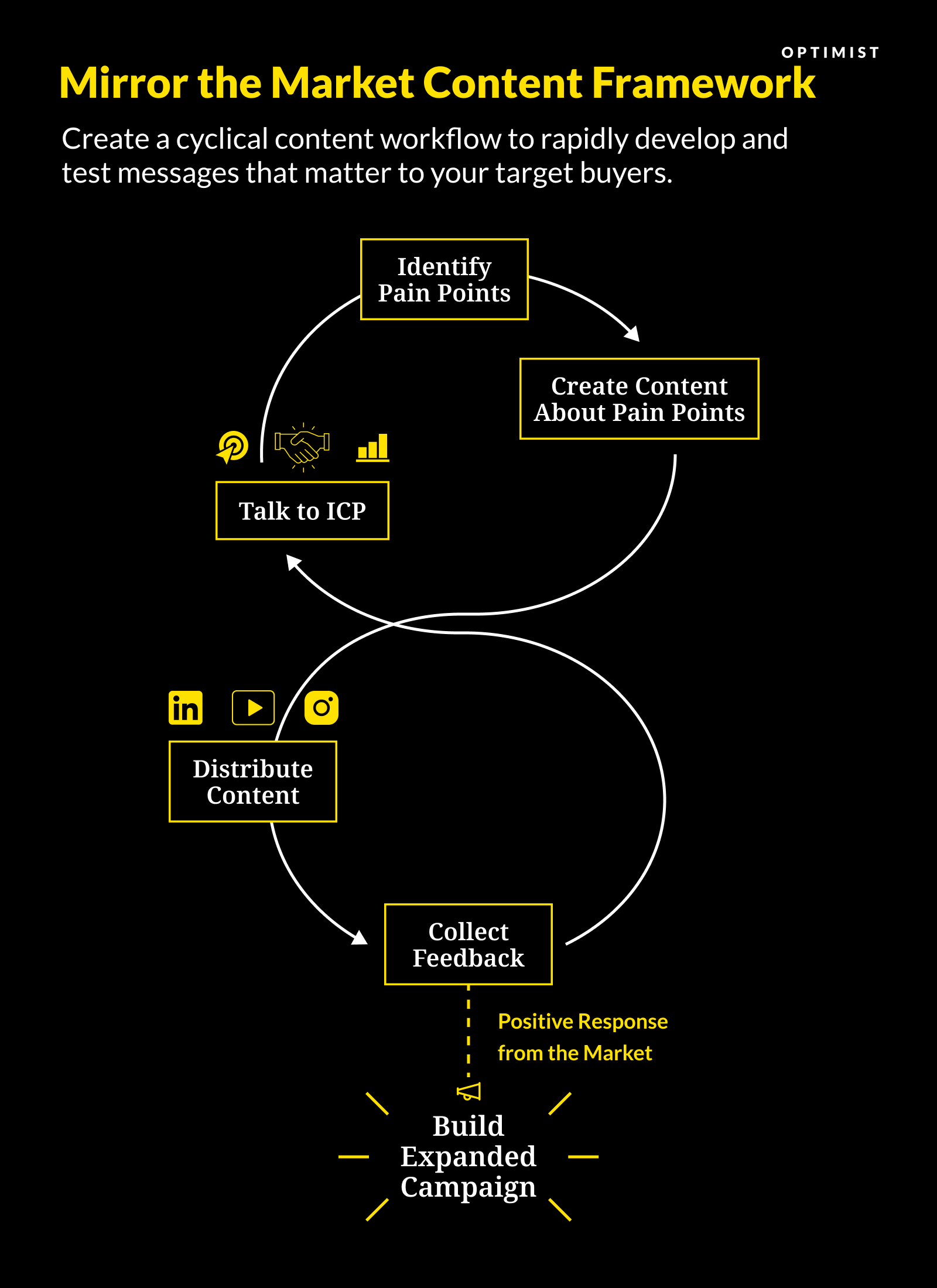
The process here is fairly straightforward:
- Talk to your ICP
- Identify their pain points
- Create content that mirrors those pain points
- Distribute content through channels like LinkedIn
- Collect feedback in the form of engagement and reach
- Expand the campaign for the messages that resonate the most
In Action: LinkedIn Content Campaigns
Our team uses the Mirror the Market framework in our own marketing.
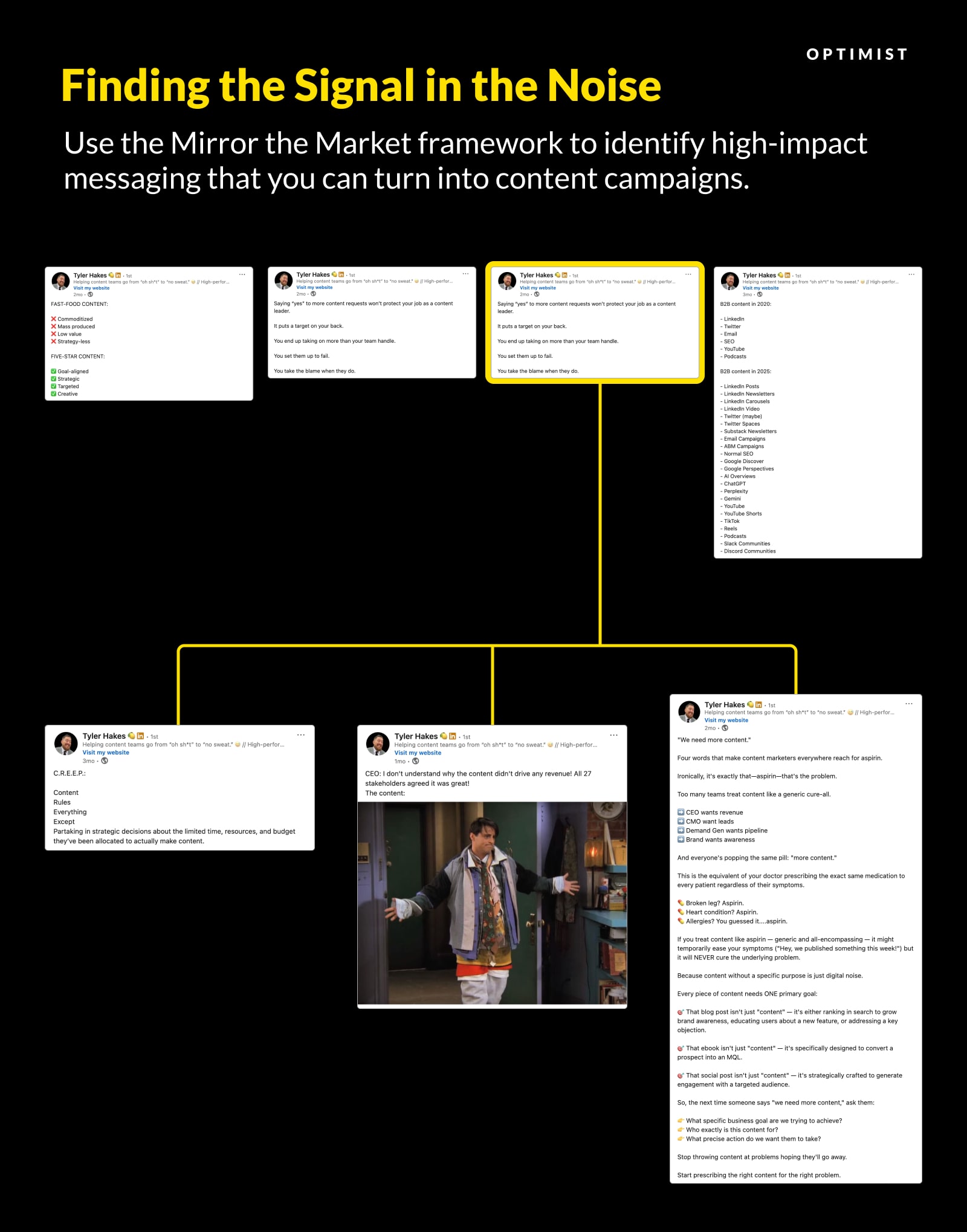
We’re constantly talking to content leaders to learn about their biggest pain points.
Then we create content — usually for LinkedIn — that mirrors the messages we’re hearing from those conversations.
Once we see which messages resonate most with our target ICP (content leaders), we expand the campaign. We create more content that focuses on that specific problem, including potential solutions and case studies that focus on how we’ve helped other teams overcome the same challenges.
Explore the full collection: Essential Content Marketing Frameworks for a Zero-Click World
