
Framework Quick Reference
When to use this: You have access to industry data or customer metrics that can be turned into benchmarks, and you need a self-qualifying lead generation mechanism.
What you’ll achieve: Self-propelling demand engine where prospects qualify themselves against benchmarks while contributing data that strengthens future iterations and attracts more leads.
Who this is for: B2B SaaS companies with aggregated customer data or ability to collect industry metrics that prospects need to compare their performance against.
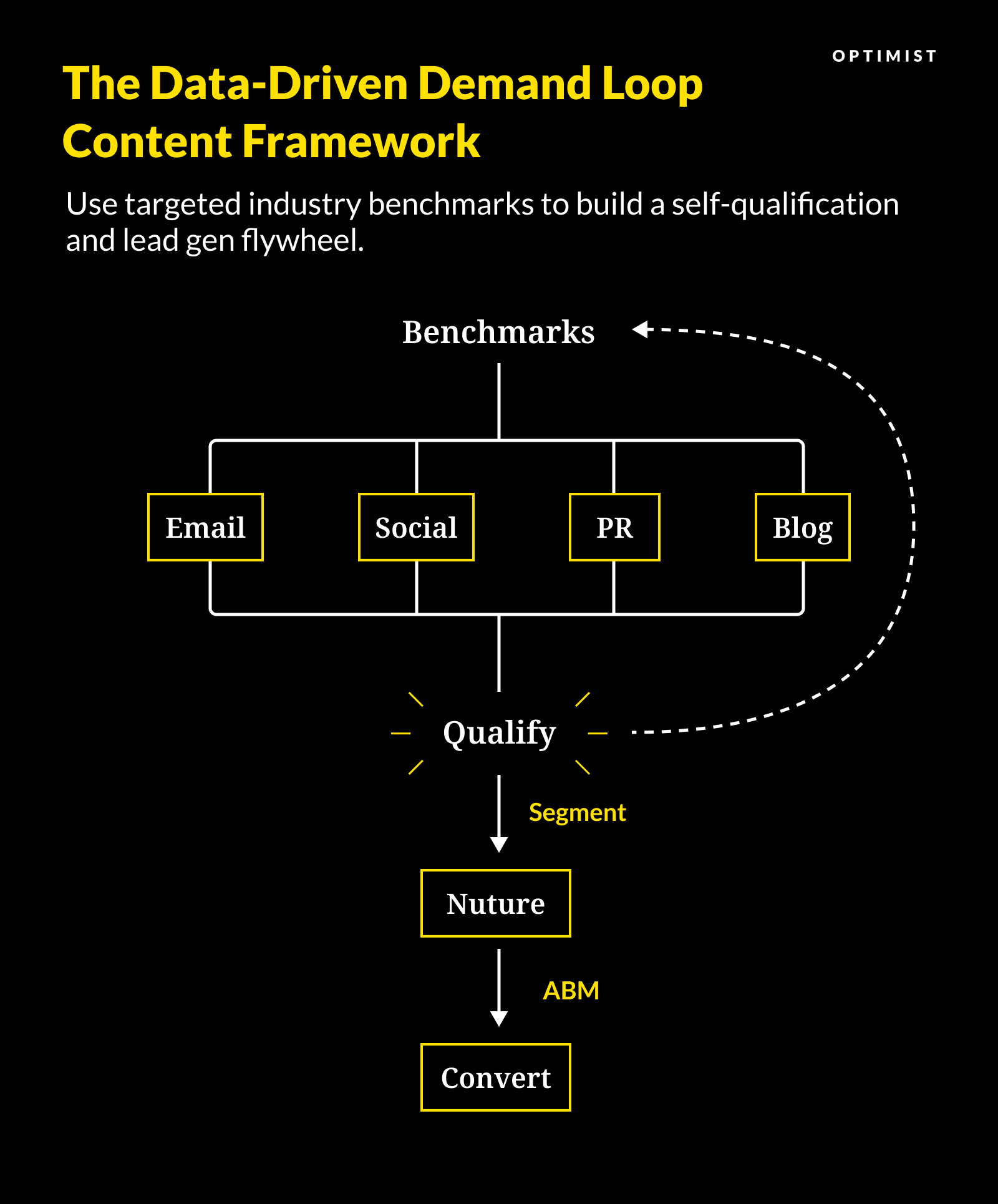
How it works: Publish benchmark data (report or interactive tool), gate access requiring users to submit their own metrics for comparison, use submitted data to qualify leads and enrich future benchmarks.
What you’ll need: Access to anonymized customer/industry data, analytics to calculate benchmarks by segment, development resources for interactive tools (optional but powerful), and marketing automation for lead nurturing.
Time to results: 8-12 weeks to compile initial benchmark data and launch, with compounding returns as more prospects contribute data to strengthen the flywheel.
Especially in an era marked by so much change, people are clamoring for industry benchmarks.
They want to know: How am I doing?
Whether it’s lead conversion rates, CSAT scores, or organic traffic numbers, teams and individuals rely on industry benchmarks to assess their efforts and calibrate their strategy.
But benchmark studies are also a powerful tool for demand gen teams. By definition, as many as 50% of companies will fall below any published benchmark. So you can use benchmarks to both attract prospects and qualify their need for your product or service.
The other interesting flywheel here is that benchmark data can become its own self-propelling mechanism.
As a gate, you can require participants to provide their own metrics to compare to the existing benchmarks, providing more data for future benchmarks—and actively qualifying each prospect.
In Practice: Amplitude
Amplitude’s Product Benchmarks report and tool is an absolutely incredible example of this in action.
They provide a real-time calculator that prospects can use to see how their product lifecycle metrics stack up versus others in their industry. The tool draws from their customer data set, allowing you to pinpoint and compare versus others in specific industry and business size.
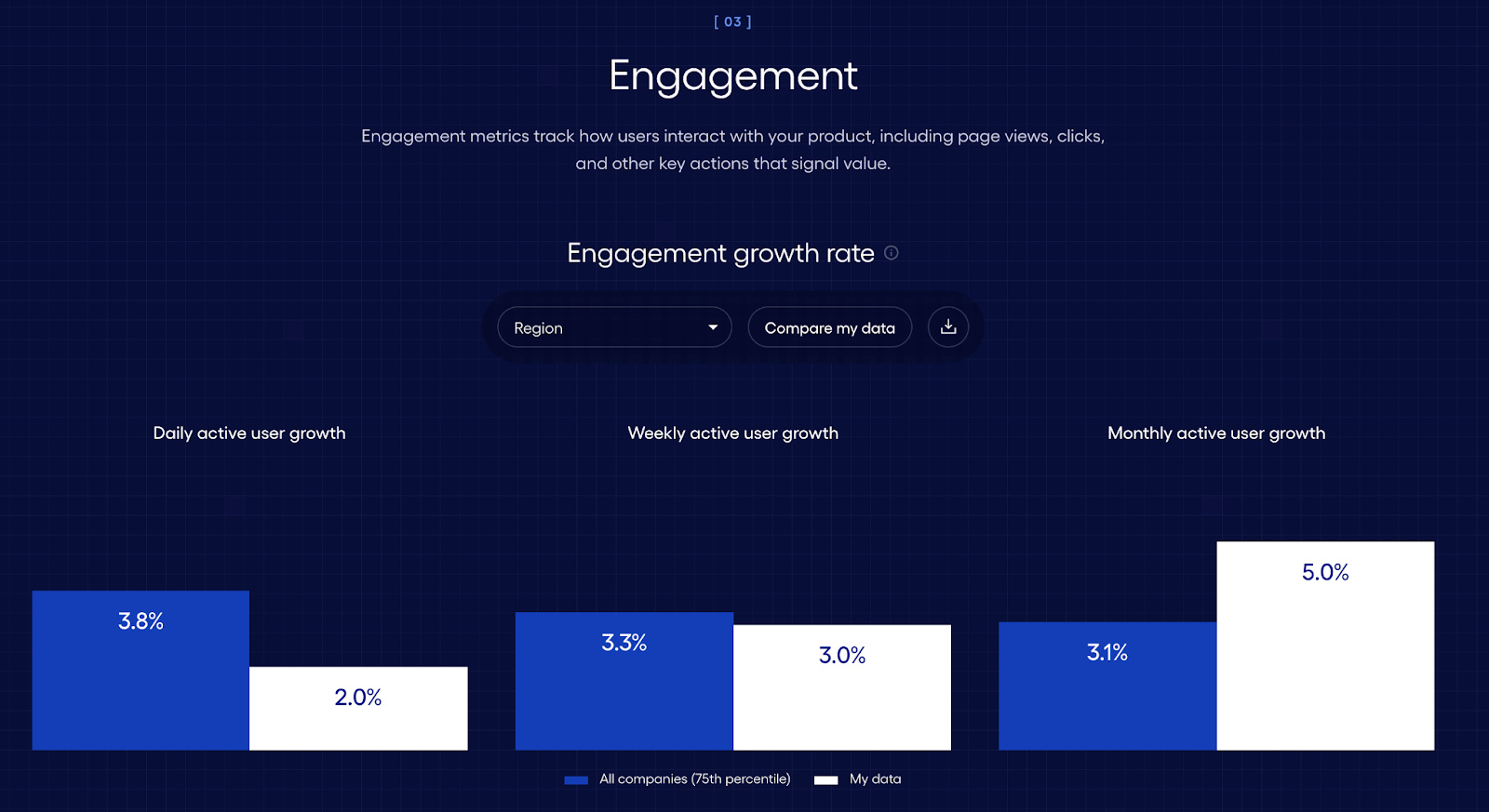
You can explore product metrics from acquisition and activation all the way through engagement and retention.
This works because it allows users to self-qualify against a set of benchmark data.
And then there’s an immediate call to action to sign up and explore your own data with the product. This allows them to create a benchmark loop – generating demand and collecting more data to power the benchmarks.
Explore the full collection: Essential Content Marketing Frameworks for a Zero-Click World
