
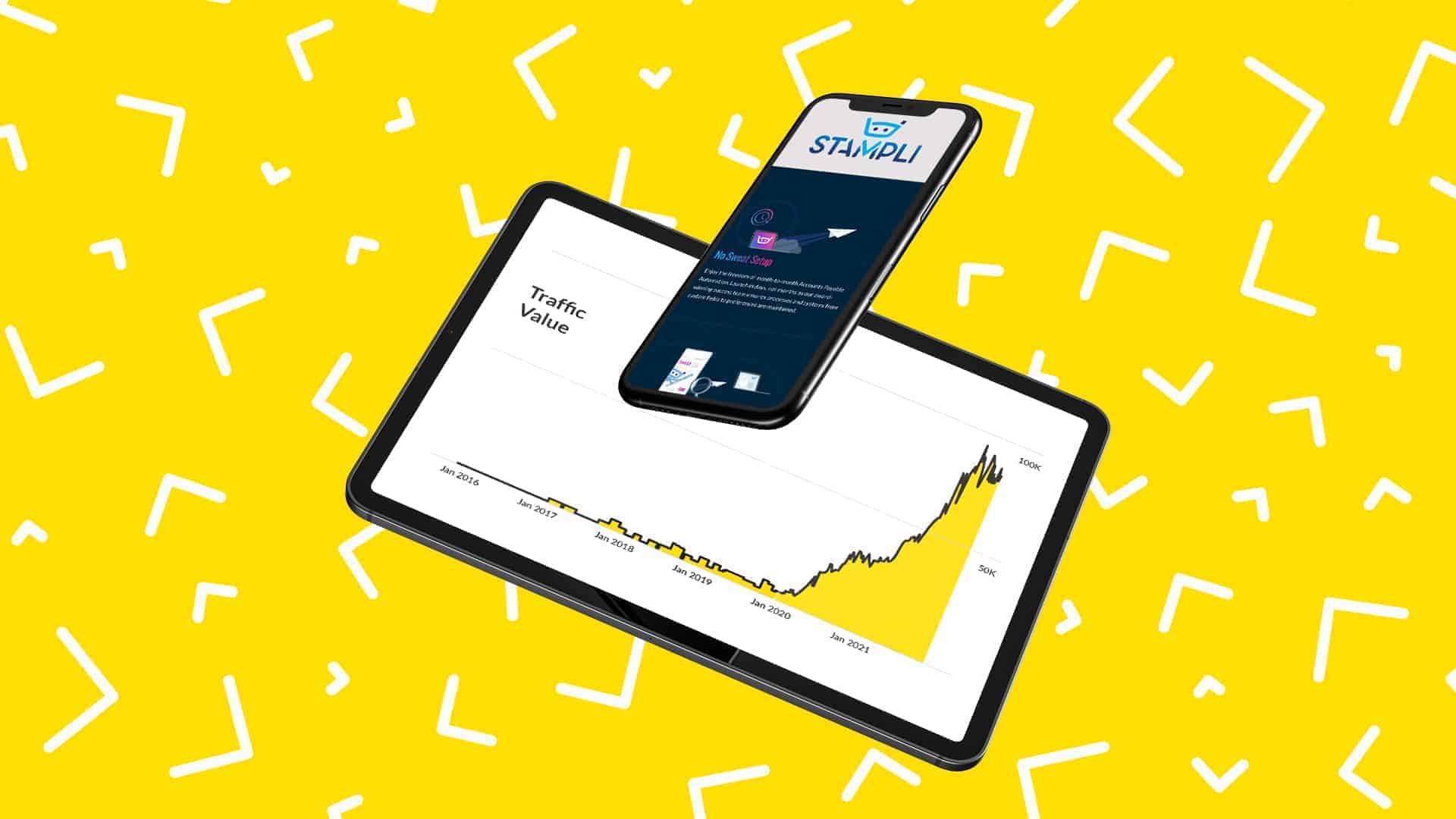
Case Study SummaryOptimist worked with Stampli, a B2B financial automation tech startup, for 7 years from their Series B to Series D rounds to help continuously evolve their content marketing strategy to align with internal and external changes.Engagement: 7 years (Series B through Series D) Outcome: 5x increase in monthly inbound pipeline Outcome: 20x (2,000%) increase in organic traffic value |
Stampli engaged Optimist shortly after raising its Series B to help build a scalable content marketing engine. Over the next seven years—through Series C and Series D—the business evolved dramatically: from a narrow AP automation tool into a full procure-to-pay platform competing head-to-head with multi-billion-dollar fintech and ERP incumbents.
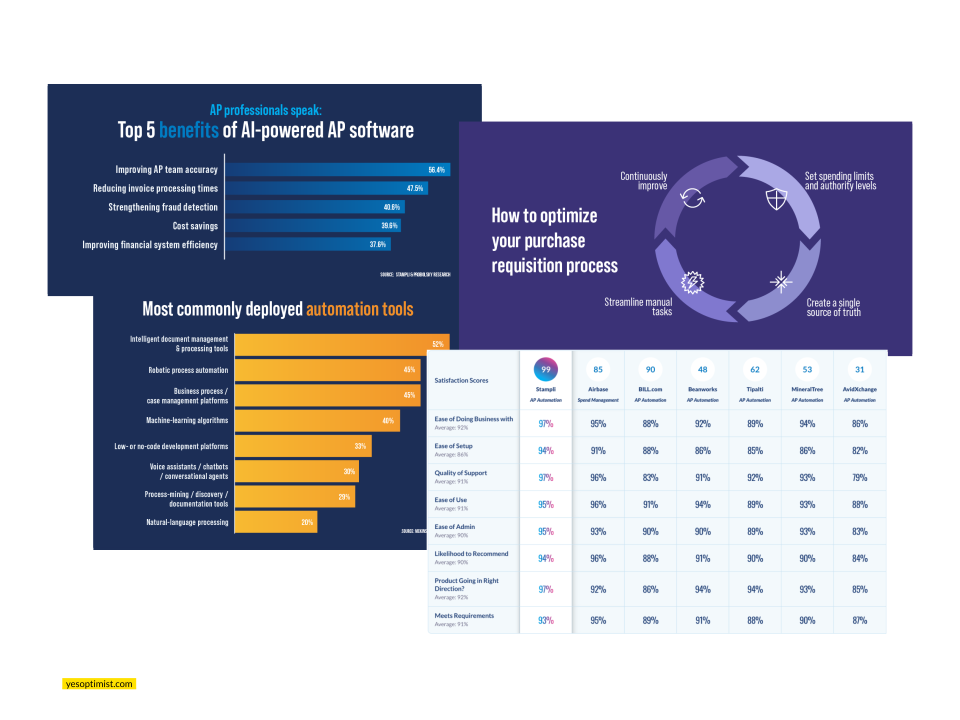
The mandate was not “do SEO,” but to ensure content consistently supported Stampli’s current go-to-market strategy, even as the product, market, and competitive pressure changed.
Problem
When the engagement began, Stampli’s content strategy was largely disconnected from revenue:
- Heavy emphasis on generic, definitional, top-of-funnel content
- Minimal alignment with the buyer journey
- Little support for sales, outbound, or competitive deals
- Increasing pressure from much larger competitors with vastly greater content budgets
As the company moved upmarket, the existing strategy became actively misaligned with how buyers evaluated and purchased the product.
Solution
We rebuilt Stampli’s content strategy multiple times to match each stage of the company’s growth and GTM evolution.
“I was impressed by their domain expertise and their outside-the-box thinking around the changing AI-search landscape. They effectively bridged what AI/search looks for with our mid-funnel business needs (more recently, but TOFU in the past).”
—Evan Vuckovic, Director of Growth
Phase 1: Buyer-Journey Reconstruction
- Replaced generic content with a structured strategy across TOFU, MOFU, and BOFU
- Prioritized commercial, high-intent queries and comparison keywords
- Rapid gains in rankings, traffic, and conversions from revenue-relevant searches
Phase 2: Upmarket & Category Expansion
- Shifted focus toward:
- Category and product-category ownership
- ERP integrations (e.g., NetSuite-related use cases)
- Industry-specific and use-case-driven content
- Increased emphasis on middle- and bottom-of-funnel demand capture
Phase 3: Competitive Differentiation at Scale
- Narrowed focus to the highest-impact, in-market content
- Built a deep library of product-focused comparison and competitive content
- Designed content to actively support:
- SDR workflows
- Outbound motions
- ABM and late-stage deal conversion
Throughout, the strategy continuously adapted to:
- Product evolution (from AP tool to full P2P platform)
- Market dynamics and increased competition from billion-dollar enterprise solution
- SEO and algorithm shifts
- The emergence of AI and LLM-driven discovery
Outcomes
- 5x increase in monthly inbound pipeline
- 20x increase in organic traffic value
- Sustained performance across multiple funding stages and GTM shifts
- Content became a core revenue-enablement asset, not just a traffic channel
- Strong visibility in high-intent, competitive, and comparison-driven buyer moments
Most importantly: the strategy remained durable because it evolved—continuously aligning content with how the business actually sold, not how content teams traditionally operate.
