
Framework Quick Reference
When to use this: You need to capture high-intent prospects actively comparing solutions or pricing, and you want comparison insights to inform your entire content strategy.
What you’ll achieve: Convert bottom-funnel search traffic by owning comparison pages, while extracting competitive differentiators to build differentiated top-of-funnel content.
Who this is for: B2B SaaS companies in competitive markets who can articulate clear positioning against alternatives and aren’t afraid to acknowledge weaknesses alongside strengths.
How it works: Build comprehensive comparison pages for each major competitor (master page + individual deep-dives), optimize for high-intent searches, extract positioning insights to create awareness content around your unique differentiators.
What you’ll need: Deep competitive intelligence, honest assessment of strengths and weaknesses, SEO expertise for comparison page optimization, and content team to translate positioning into awareness campaigns.
Time to results: 8-12 weeks to build comparison hub and optimize for search, with ongoing content strategy benefits as differentiators inform upstream content creation.
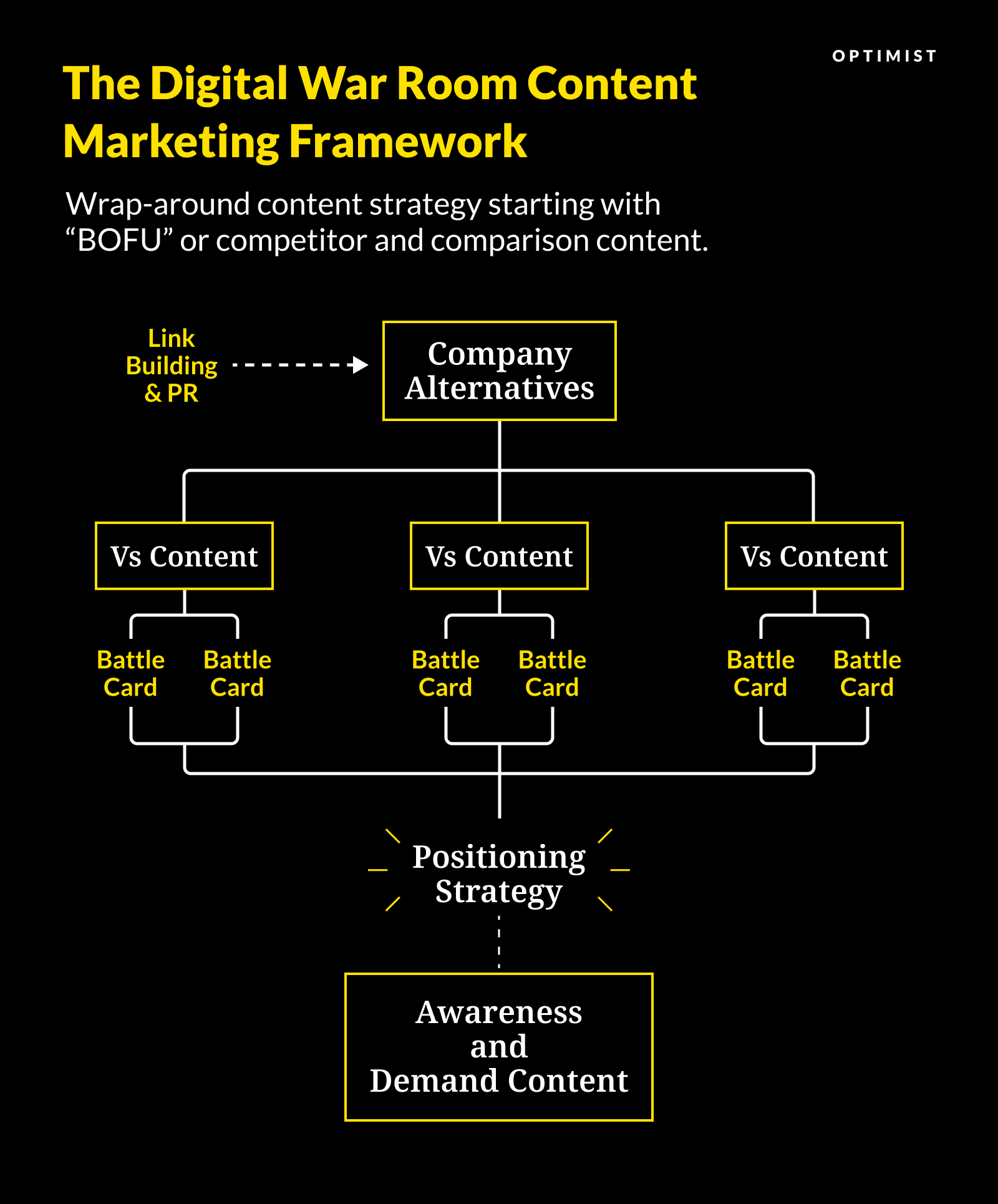
While SEO has certainly changed, a final strategy that still works on this front is capturing prospects who are close to making a buying decision.
That’s when this framework comes into play to help you drive conversions from organic search traffic at the bottom of the funnel.
The trick is capturing high-intent searches — those with language like “compare product X vs. Y,” “X pricing,” “where to find X near me,” and so on.
These indicate the searcher is close to making a decision and/or purchase. And, therefore, is more likely to convert than someone seeing an ad or coming in from a blog post.
In Practice: Close CRM
One of the best examples of a comprehensive Digital War Room is the CRM, Close.
They have a master “Close vs other CRMs” page, which clearly lays out their positioning, their relative, strengths, and even—gasp!—their weaknesses.
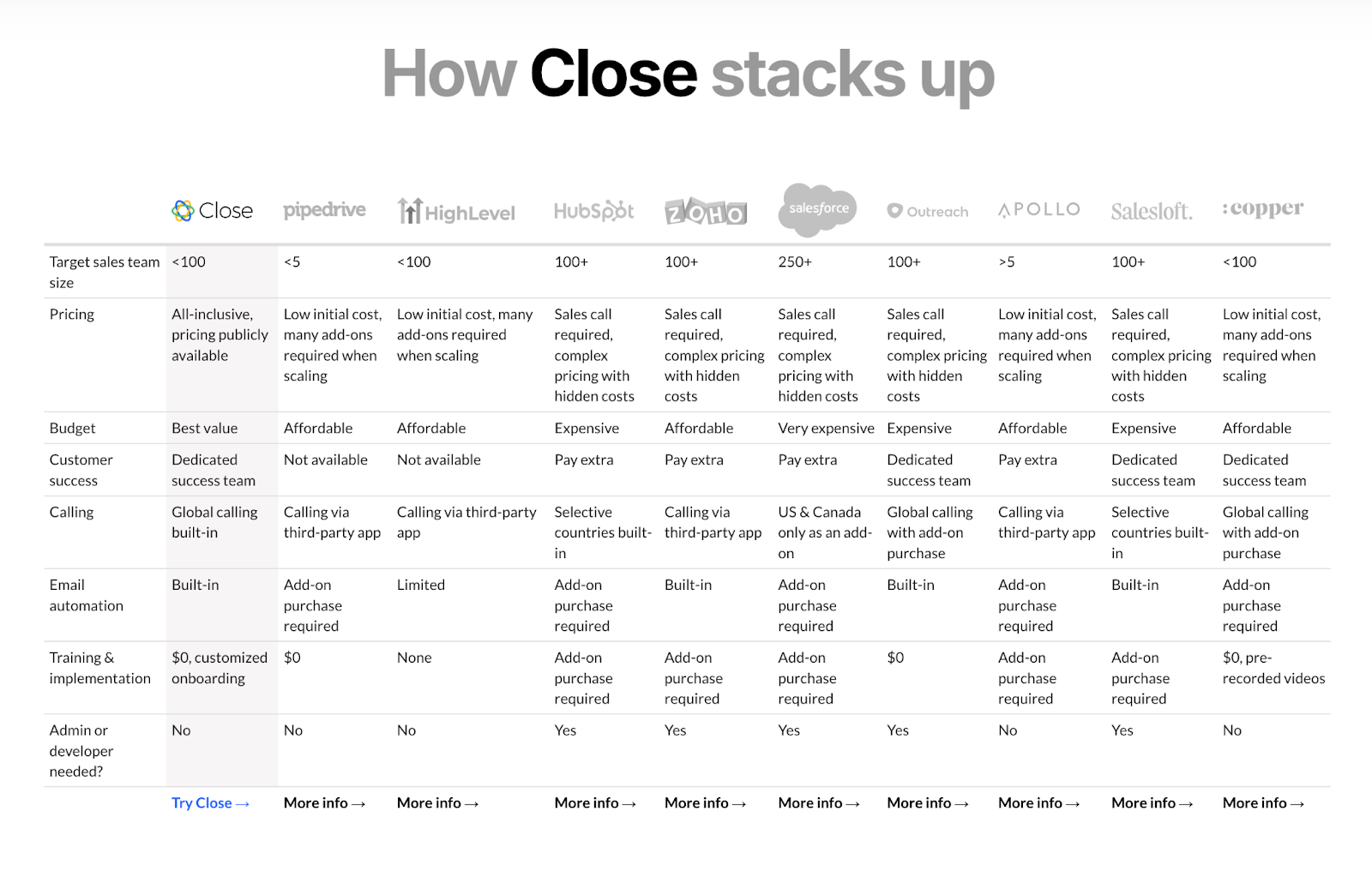
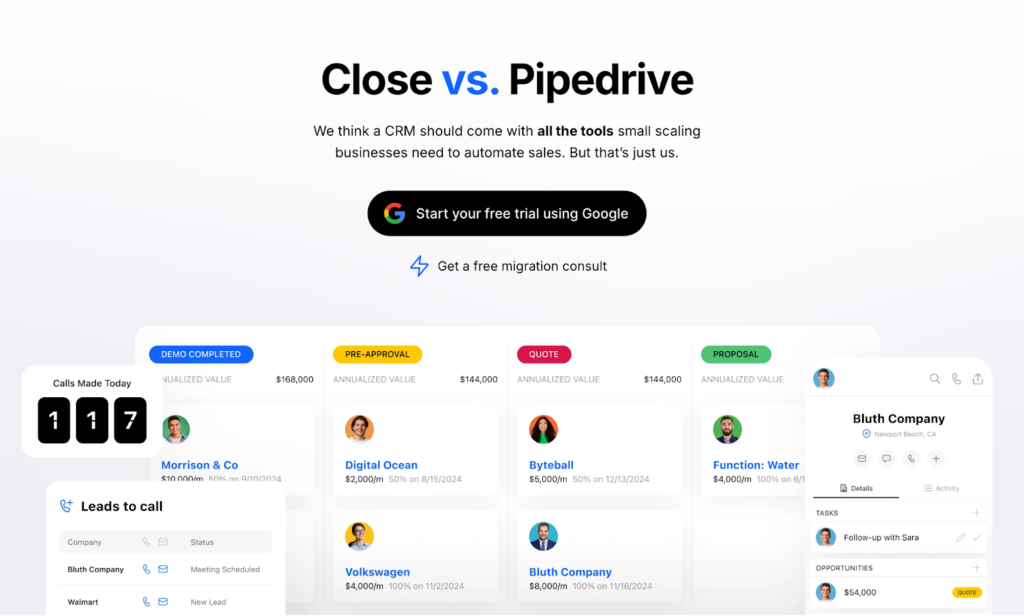
Each competitor outlined feeds into a dedicated comparison page where they go deeper on how their product stacks up versus competitors.
Of course, it’s not clear from an outside perspective how this information translates into the rest of their content strategy.
But the rich comparison content is obvious fodder for deeper, differentiated content for driving awareness and affinity.
For example, one of the big differentiators that Close mentions are their automations that help sales teams respond faster. They’ve taken that idea and explored it further, publishing a post on what they call a “Time to Talk” experiment.
We can see here how their positioning—faster than competitors—feeds directly into early-stage content designed to attract their ICP and frame the conversation around how sales teams should measure and understand the speed of their workflows.
Explore the full collection: Essential Content Marketing Frameworks for a Zero-Click World
