
Framework Quick Reference
When to use this: You have busy subject matter experts who don’t have time to write but can speak freely, or you want to leverage guest expertise and co-marketing opportunities.
What you’ll achieve: 100x reach by turning podcast/video episodes into blog posts, social clips, graphics, and SEO content while capturing perspectives your team couldn’t generate alone.
Who this is for: B2B companies building thought leadership through podcasts or video series who need to maximize ROI from each episode.
How it works: Record video or podcast content as your anchor, then extract key moments, insights, and Q&A segments to rebuild as native content for blog, social, and search channels.
What you’ll need: Video/podcast production setup, content strategist to identify repurposing opportunities, writer to adapt spoken content, and designer for visual assets.
Time to results: 4-6 weeks to establish the workflow, with potential for 10x+ content output once the engine is running.
A variation on the Anchor & Hooks framework starts with podcast or video content as the anchor.
It’s the same basic approach, but rather than a traditional anchor piece (e.g., research report or blog post), you start by recording video or podcast content.
There are some benefits to this approach:
- Industry knowledge: Rather than relying entirely on your team to come up with content ideas or concepts, you can have guests who provide new perspectives and insights.
- Co-marketing: Guests can help amplify and distribute the content, lending credibility and increased reach.
- Free-form: This structure might work better for capturing the ideas of busy SMEs who don’t have time to sit down and work through written content formats.
Like with the vanilla Anchor & Hooks framework, it’s important to keep in mind that the Anchor is just the source material. We’re not married to that format.
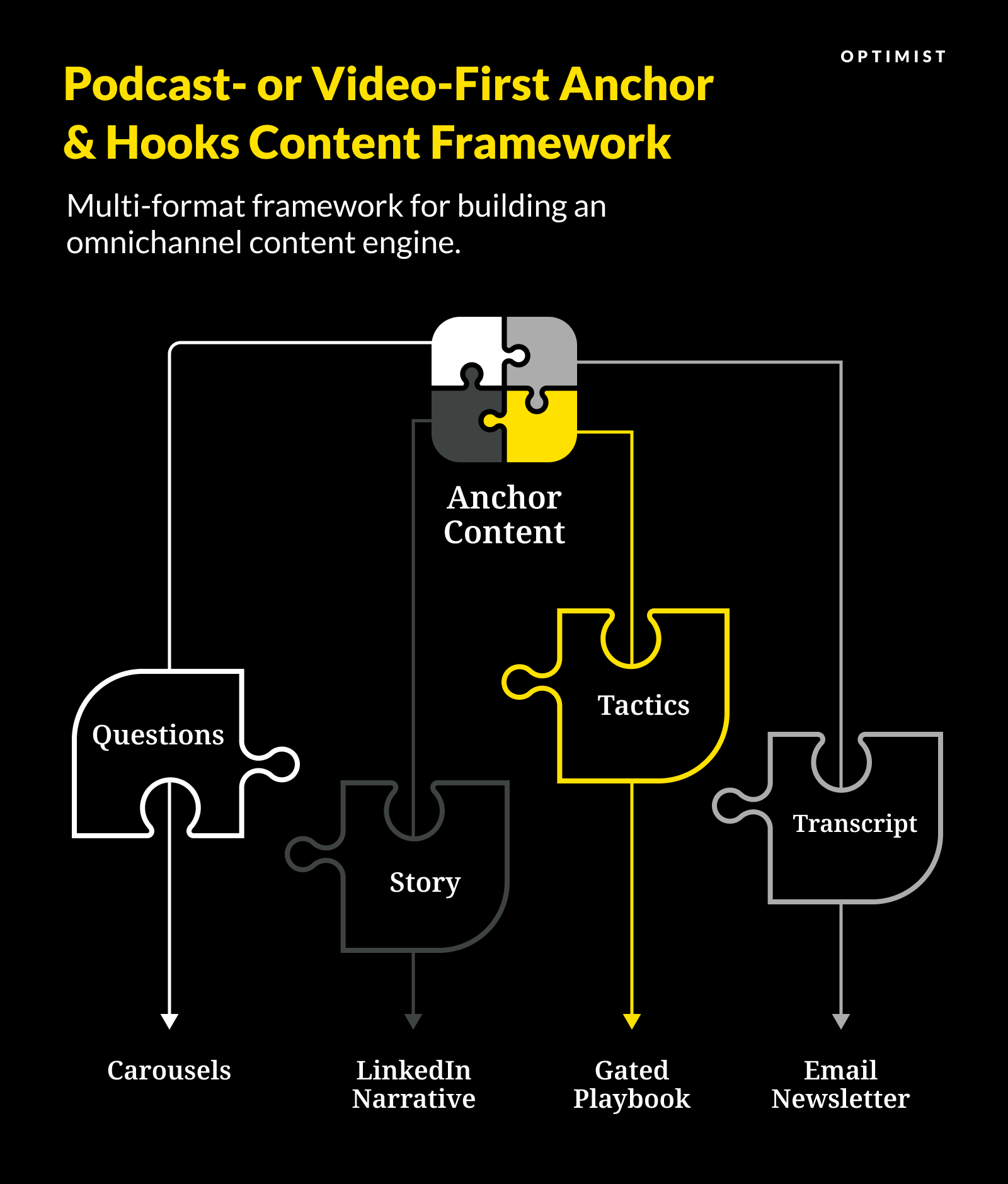
In other words, it’s not just chopping the source material into shorter clips.
We’re repurposing the meat of the content itself into native content to power our other channels and formats. And, ideally, the Anchor content is specifically constructed to contain elements that feed into the secondary content formats.
For example, maybe your podcast has a rapid-fire Q&A section that you can turn into question-answer graphics or blog posts.
Hot tip: Try using this framework to inform your SEO content plan. Instead of doing traditional keyword research first, you could start with the topics being discussed in your videos and podcast episodes. Then identify relevant keywords based on each topic. Finally, write content that works in the unique angles and insights you uncovered in the source material.
In Action: Databox
The Databox team recently revealed their version of this playbook:
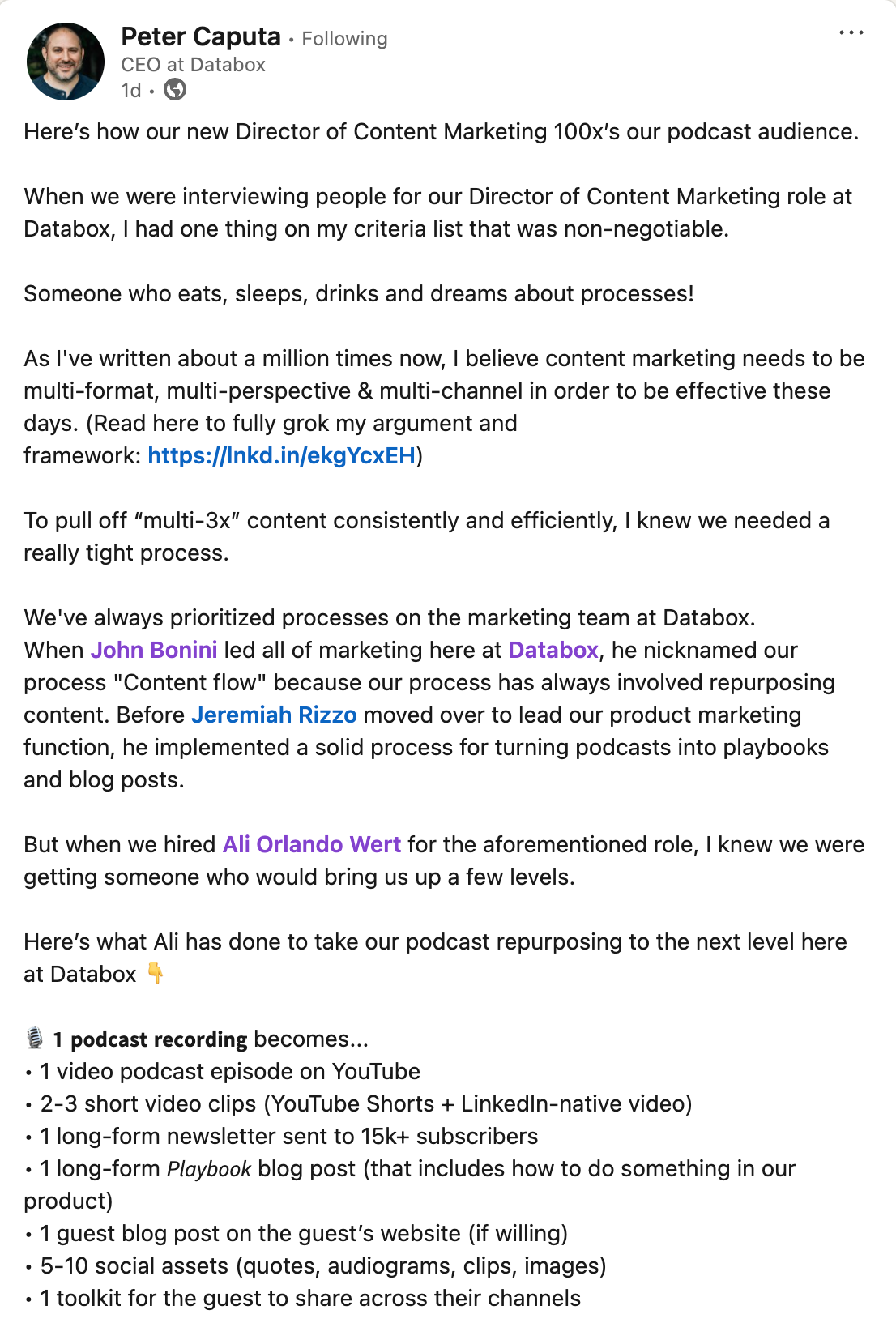
They’ve been able to 100x their reach by building an omnichannel content engine based on their podcast, Metrics and Chill.
Explore the full collection: Essential Content Marketing Frameworks for a Zero-Click World
